


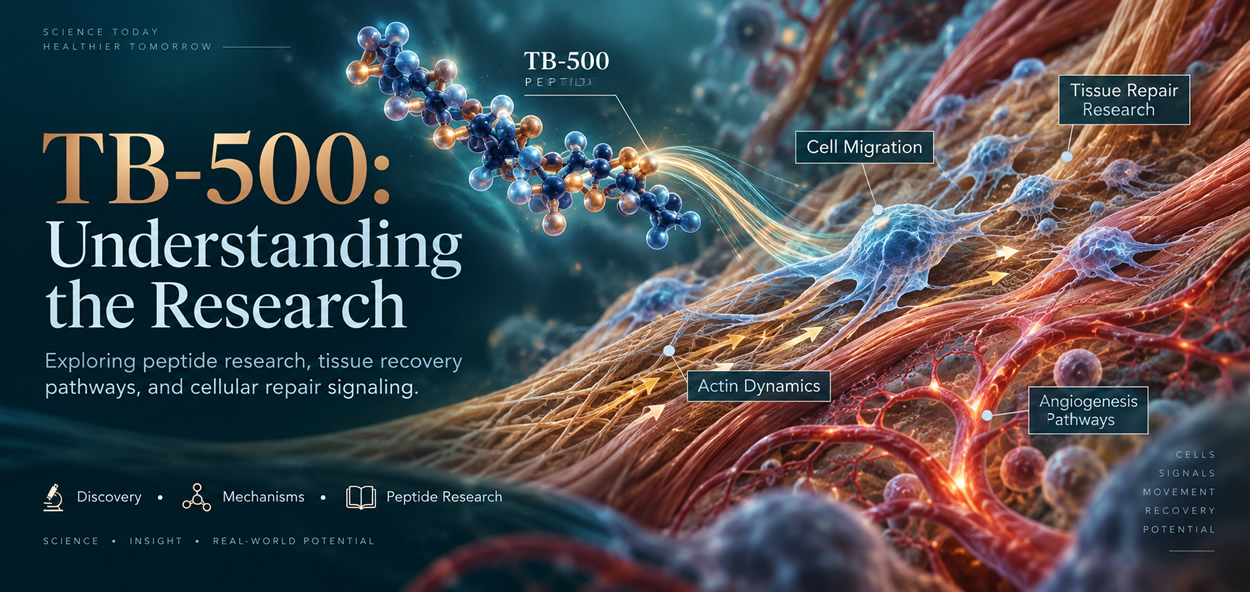
TB-500 is a synthetic peptide related to thymosin beta-4, a naturally occurring protein studied for its involvement in cell movement, blood vessel formation, wound repair, and other processes associated with tissue recovery.
TB-500 and thymosin beta-4 are often discussed as though they are interchangeable, but they are not the same molecule. Thymosin beta-4 is a naturally occurring 43-amino-acid peptide, while the name TB-500 is commonly used for synthetic products related to a smaller portion of that molecule.
This distinction matters because most published research has examined thymosin beta-4 rather than TB-500 itself. Research involving the broader thymosin beta-4 system provides biological context, but direct evidence involving TB-500 remains much more limited.
What Has TB-500-Related Research Studied?
Research involving thymosin beta-4 and related peptides spans several biological processes connected with tissue repair and regeneration.
- Cell migration: Studies have examined how thymosin beta-4 influences the movement of cells involved in wound closure and tissue repair.
- Blood vessel formation: Research has explored its effects on angiogenesis, endothelial cells, and signaling involved in establishing blood flow to healing tissue.
- Wound and skin repair: Animal and laboratory studies have reported effects on wound closure, collagen organization, tissue growth, and vascular development.
- Inflammatory signaling: Researchers have investigated how thymosin beta-4 may interact with pathways involved in inflammation and tissue stress.
- Musculoskeletal tissue: Tendon, ligament, muscle, bone, and other connective tissues have been studied, although direct musculoskeletal evidence is much smaller than is often assumed.
What Is Thymosin Beta-4?
Thymosin beta-4 is a naturally occurring peptide found in many tissues throughout the body. It interacts with actin, a structural protein that plays an important role in cell shape and movement.
Cells must be able to move toward an injured area during many forms of tissue repair. This relationship with actin is one reason researchers have investigated thymosin beta-4 in wound healing, vascular development, inflammation, and tissue regeneration.
Research has also identified interactions involving endothelial cells, growth factors, inflammatory pathways, and extracellular matrix remodeling.
TB-500 and Cell Movement
Cell migration is one of the most frequently studied mechanisms associated with thymosin beta-4 biology.
During wound healing, several types of cells must move into damaged tissue. Laboratory studies have examined thymosin beta-4-related signaling in endothelial cells, fibroblasts, muscle cells, and other cell types involved in repair.
Research suggests that interactions with actin and other signaling pathways may influence the ability of these cells to migrate and organize during tissue recovery.
The limited research directly involving TB-500 has also included laboratory testing of fibroblast migration and wound-healing activity.
What Has Research Found About Blood Vessel Formation?
Angiogenesis, the formation of new blood vessels, is another major area of thymosin beta-4 research.
Healing tissue requires oxygen and nutrients, making the development and repair of blood vessels an important part of recovery.
Laboratory and animal studies have examined thymosin beta-4 in relation to endothelial cell migration, vascular endothelial growth factor signaling, nitric oxide pathways, and other mechanisms involved in new blood vessel formation.
This vascular research makes up a much larger portion of the scientific literature than direct studies involving tendons, ligaments, or muscle.
What Has Research Found About Wound Healing?
Wound and skin repair represent one of the largest areas of thymosin beta-4 research.
Animal studies have reported changes in wound closure, collagen formation, tissue organization, and blood vessel growth following experimental treatment with thymosin beta-4.
Laboratory studies have also examined fibroblast and keratinocyte movement, extracellular matrix remodeling, and cellular responses associated with wound closure.
Human research involving thymosin beta-4 has included wound, skin, and ocular applications, although these studies involve the full thymosin beta-4 molecule rather than establishing the same effects for TB-500.
What Has Research Found About Musculoskeletal Tissue?
TB-500 is frequently associated with muscle, tendon, ligament, and joint recovery, but the published research is not concentrated in these areas.
A 2026 scoping review examined 80 studies involving thymosin beta-4, TB-500, and related derivatives. The largest research categories involved wounds and soft tissue, blood vessels, and ocular tissue.
Direct studies involving tendon, ligament, muscle, cartilage, and spinal tissues were comparatively uncommon. The review identified only two tendon studies, three ligament studies, one muscle study, and a small number involving other direct musculoskeletal tissues.
This means the biological mechanisms associated with tissue repair are well represented in laboratory research, but direct evidence for many of the musculoskeletal applications commonly associated with TB-500 remains limited.
What Human Research Exists?
Human research involving thymosin beta-4 exists, particularly in ocular, wound, and soft-tissue settings.
However, this should not be confused with direct human evidence for TB-500.
The 2026 scoping review identified 19 human studies within the broader thymosin beta-4 literature, but most evaluated thymosin beta-4 itself. Direct TB-500 evidence was limited to a single experimental study involving metabolite analysis and laboratory fibroblast wound-healing tests.
As a result, much of what is currently discussed about TB-500 is based on biological mechanisms and research involving the related thymosin beta-4 molecule rather than direct clinical studies of TB-500.
What Has Safety Research Reported?
The difference between thymosin beta-4 and TB-500 is also important when considering safety research.
Human studies of thymosin beta-4 provide some information about the broader peptide system, but they do not establish a complete safety profile for TB-500 itself.
Direct human exposure data for TB-500 remains limited, which means questions about pharmacokinetics, long-term effects, dose-response relationships, and uncommon adverse events have not been well characterized in controlled clinical research.
Laboratory research has explored mechanisms involving angiogenesis, cell migration, inflammatory signaling, and tissue remodeling. These biological effects remain active areas of investigation as researchers work to better understand their significance in different tissues and clinical settings.
How Does TB-500 Compare With BPC-157?
| Compound | Research Focus | Current Evidence Base |
|---|---|---|
| TB-500 | Cell migration, vascular signaling, wound repair, and tissue recovery | Direct TB-500 research is minimal; most related evidence involves thymosin beta-4 |
| BPC-157 | Tendon, gastrointestinal tissue, vascular signaling, muscle, nerves, and tissue repair | Extensive preclinical research with limited emerging human research |
TB-500 and BPC-157 are often grouped together because both are associated with research involving tissue repair and recovery, but their research histories and proposed mechanisms are different.
Research related to thymosin beta-4 focuses heavily on cell migration, actin biology, angiogenesis, wound repair, and vascular processes.
BPC-157 research spans a broader range of preclinical tissue models, including tendons, gastrointestinal tissue, nerves, muscle, and blood vessels.
Neither evidence base supports treating the two peptides as interchangeable, and there are currently no large head-to-head human studies comparing them.
Why Is TB-500 of Research Interest?
TB-500 remains of scientific interest because the thymosin beta-4 system is involved in several biological processes important to tissue repair.
Research has explored cell migration, angiogenesis, inflammatory signaling, extracellular matrix remodeling, wound closure, and tissue regeneration.
At the same time, newer reviews have highlighted an important gap between the large body of thymosin beta-4 research and the much smaller amount of evidence directly involving TB-500.
Future research separating the effects of full thymosin beta-4, TB-500, and related fragments will be important for determining which findings apply to each individual compound.
Research Sources
- 2026 scoping review of thymosin beta-4 and TB-500 research
- Laboratory research examining actin, cell migration, and wound closure
- Animal studies examining skin and soft-tissue repair
- Research involving angiogenesis and endothelial signaling
- Human thymosin beta-4 research involving wound and ocular tissue
- Experimental research directly examining TB-500 and related metabolites